
The foundation of the program: establish a daily walking rhythm, then layer in gentle stretching. No intensity targets — just showing up for ten minutes each day.
Week 1 is deliberately simple. Every day, walk for ten minutes at a pace where you could speak in full sentences without gasping. In Amsterdam that might mean a loop along Frederiksplein, a canal-side path, or a route through a nearby park. The surface matters less than the regularity.
Comfortable pace typically falls between 4.5 and 5.5 km/h for most adults — roughly 800 to 1,000 steps in ten minutes depending on stride length. You are not trying to raise heart rate dramatically; you are teaching your nervous system that movement happens at a predictable time each day.
Choose one daily anchor: after waking, mid-morning break, lunch hour, or early evening before dinner. Dutch daylight varies significantly by season; a fixed time helps more than chasing perfect weather. If rain arrives, walk indoors — a long hallway, office corridor, or shopping arcade counts.
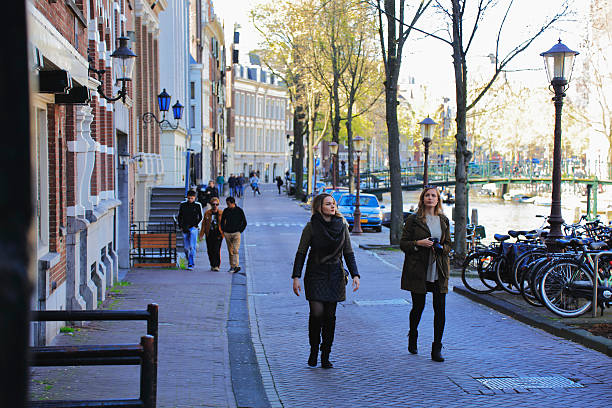
Days 1–2: Explore route options. Walk the same path both days to reduce decision fatigue. Time yourself once to confirm the loop takes roughly ten minutes — adjust distance if needed.
Days 3–4: Pay attention to breathing. Nasal breathing when possible keeps intensity moderate. If you commute by bike, consider a separate walking block rather than counting cycling as the session — the program targets weight-bearing gait.
Days 5–7: Reflect on timing. Did morning or evening feel more sustainable? Lock in your preferred slot for Week 2. Write one sentence about how your legs and mood felt after each walk — a simple log builds awareness without complexity.
10 min
Daily duration
Easy
Conversational pace
7 days
Consistent rhythm
Week 2 keeps the same ten-minute walk and adds two minutes of stretching immediately afterwards. Total time: about twelve minutes. The stretches target areas that tighten during desk work and cycling — calves, hip flexors, hamstrings, and upper back.
Stretch only to mild tension, not force. Hold each position 20–30 seconds, breathing steadily. Static stretching after walking is discussed in sports science literature as one approach to maintaining flexibility when done consistently; dynamic bouncing is not needed here.
Two minutes covers roughly four stretches at 30 seconds each. If you finish early, repeat the calf stretch — cyclists and canal-bridge climbers often benefit from extra calf attention.
Urban Netherlands offers flat, walkable infrastructure. These route types work well for ten-minute loops regardless of where you live.
Vondelpark, Westerpark, and smaller neighbourhood greens like Frankendael provide soft surfaces and shade in summer. A typical park perimeter takes eight to twelve minutes at an easy pace. Early mornings tend to be quieter before cycling commuter volume peaks.
Canal-side pavements in Amsterdam, Utrecht, and Leiden offer flat terrain with visual interest. Watch for cyclists — stay to the pedestrian side. Evening walks along water can feel calming after screen-heavy workdays, which supports the habit-stacking goal of Phase 1.
By the end of Week 2, you should have fourteen consecutive days of walking (allow one rest day if needed, but try to maintain momentum). Stretching should feel like a natural full stop to the session — not a chore bolted on.
Before starting Phase 2, ask yourself three questions: Is my walking time slot reliable? Do my shoes and route still work in current weather? Can I hold a plank for 15–20 seconds without discomfort? If yes, proceed to micro-workouts in Week 3. If planks feel challenging, spend an extra three days on Week 2 stretches focusing on core awareness, then advance.
Phase 2 introduces squats and plank holds — building on the mobility base you created here. There is no rush; two solid weeks of walking and stretching prepare joints and habits better than skipping ahead.
Continue to Phase 2Stay at a pace where you can hold a conversation. Stop and rest if you feel unwell, unusually short of breath, or discomfort that worsens while walking. This is general guidance only — not personalised instruction.
Cobblestones and tram tracks require attention. Replace worn shoe soles to reduce slip risk on wet days. Avoid headphones at high volume near traffic and cycling lanes.
Never force a stretch. Move into position gradually and breathe. Skip stretches that aggravate existing injuries until you have personal guidance from a qualified professional.